Aprender Design

Sep 18, 2026

A View on Design: with Ayo Fagbemi and Garrett Herzik

Aprender Design

Aprender Design

School

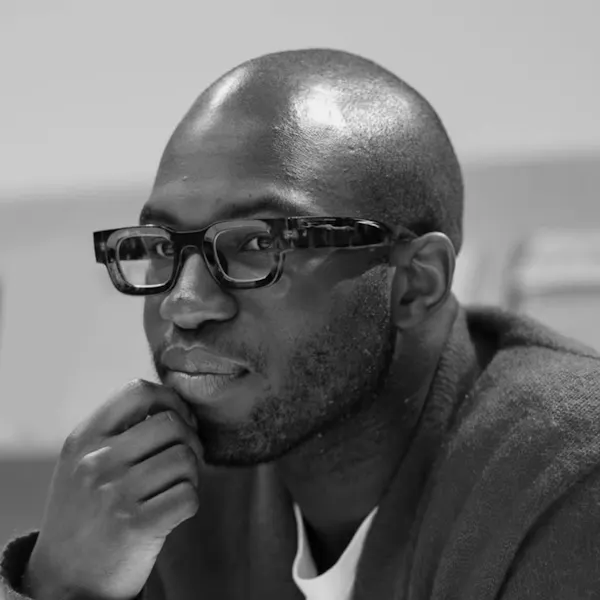
Ayo Fagbemi brings experience from Wieden+Kennedy, Mother London, Google Creative Lab, and Youtube Creative Studio. His work sits the intersection of strategy, culture, and creativity, helping brands find what makes them unique.

Garrett Herzik helps brands navigate complex challenges through strategy, positioning, naming, and innovation. He also created Operating Logic, a toolkit for better decision-making and problem-solving.

Check out a brief conversation we had with Ayo and Garret, instructors at 
Bridging Strategy & Design course, and learn more about their journey and design thinking.

Hi Ayo and Garrett! For those who are just getting to know you through the school, could you introduce yourselves and share a bit about your journey?

Ayo Fagbemi: I’m Ayo Fagbemi, Co-Founder and Strategy Director at Explorers Club, we are a strategy and design company based in London and Los Angeles. I luckily started my career at Wieden+Kennedy, thanks to the advice from Preety Mudhar and Paula Bloodworth, then worked brand side at Google + YouTube and also at PORTO ROCHA, where I met Garrett and spent a lot of time talking about the wonderful world of strategy with.

Garrett Herzik: I’m Garrett, based in Austin, Texas, previously Amsterdam. Currently, Associate Strategy Director at PORTO ROCHA. New father, husband, proficient in strictly medium-level crosswords. I got my start in strategy by asking friends what problems they were facing as they started businesses. I’ve been asking grander questions since and it has consistently been the best way to follow my curiosity into larger challenges.


What experiences have most shaped the way you think about strategy and design today?

Garret: I used to be so concerned about working with the big names. I wanted Nike, Apple, and Google on my resume, because who doesn’t? But I’ve consistently found that the brands with the most fascinating problems are often the ones you have never heard of yet, in the industries no one concerns themselves with. When you have an ability to find the intrigue in boring problems you’ll often find yourself amidst the most interesting solutions. And, you become a particularly useful kind of person to most any creative agency.

Ayo: For me, it’s understanding the effectiveness and value strategy can have on a business over the long-term. Often, in what we do we are creating shifts that can live in documents and inside the minds of people in different shaped businesses, so when you see results it’s particularly important to know the consequences of the many conversations, research and rigour that goes into synthesizing and articulating a problem to solve has on the transformation.


Was there a particular project or career move that changed the way you approached your work? What did it teach you?

Ayo: I’ve learnt a lot from projects where the answer is right at you, a phrase we use often is hidden in plain sight. Whether it’s taking cues from a line that is on the back of every product, or harking back to a previous era in a company's history or taking a view directly from customer feedback. It’s these projects that teach you to listen and look very closely, to be truly attentive to every signal and sign. 

Garrett: Each project you take on adds another scenario to your rolodex. So naturally, it’s difficult to say that just one changed the way I work. But, some time ago, I had the chance to work for one of the largest technology companies in the world on what seemed to be a quite narrow brief. No matter how hard our team tried, we couldn’t pin the solution down. The problem kept changing. The team kept changing. The constraints kept changing. It left our team demoralized after feeling like we had spun our wheels for weeks on end without any progress. What we as a team realized was that our efforts to exercise our control over a changing situation was causing our own demise. And furthermore, our desire to find a clean solution was what we wanted, not what the client actually needed. Ultimately, my understanding of service has vastly expanded since. 

The course is about bridging strategy and design. Why do you think this connection is so important today, and what can each discipline learn from the other?

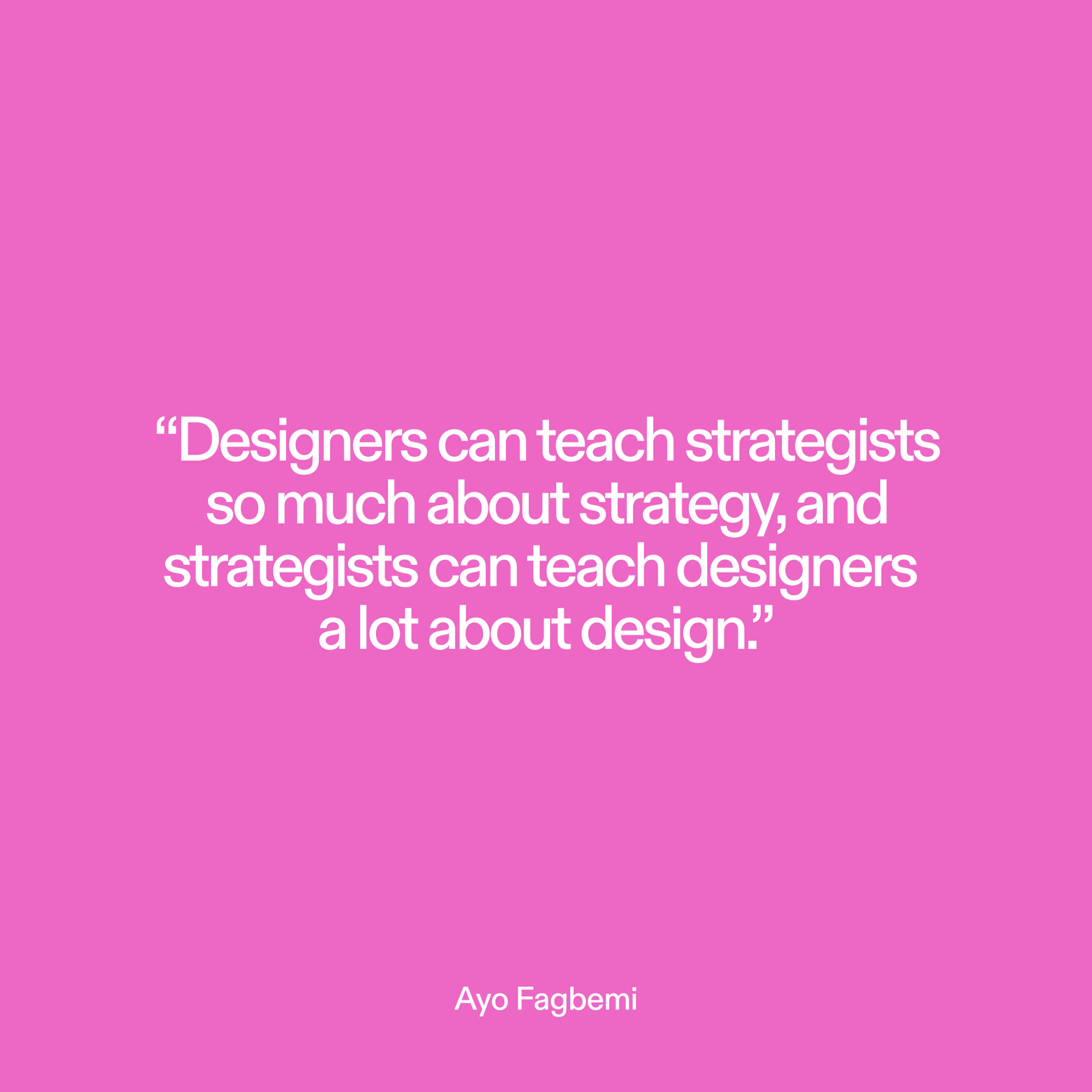
Ayo: Designers can teach strategists so much about strategy, and strategists can teach designers a lot about design. In a world where output and input has become a new way of thinking for so many it makes you realise how important both are. Too often, strategy and design has been disconnected from handoff culture, we advocate for closer collaboration between the two disciplines. As a founder of a company alongside a designer you realise how much this back and forth relationship means every element of a system and word on a page sings when the two are connected. 

Garrett: What is the point of a good idea if it never touches someone else? We’re intent on discussing two primary modes in the creative process: making a decision and expressing a decision. Those distinct but interrelated practices are surprisingly difficult to pull off in any professional setting.

The course has evolved since its original version, and you’re now bringing your own perspectives to it. What have you changed, added, or rethought in the curriculum?

Ayo: We want to make sure everyone on the course is able to understand the rules and the fundamentals, yet has the ability to apply to their own world and create their own point of view on strategy. With the addition of creating a case study that acts as a takeaway and enshrines the learnings within a document that they can keep and reference.

Garrett: Ayo and I are an unusual but effective duo. I find myself naturally drawn to the underlying logic and structure of a creative argument. Ayo is a gifted writer and storyteller. He makes the obvious but unspoken realities appear out of thin air. Sutdents of the course will benefit from seeing both halves of that equation play out live through the teaching and curriculum.

The design industry and job market have changed considerably in recent years. What skills or ways of thinking are becoming increasingly valuable for designers who want to build sustainable careers?

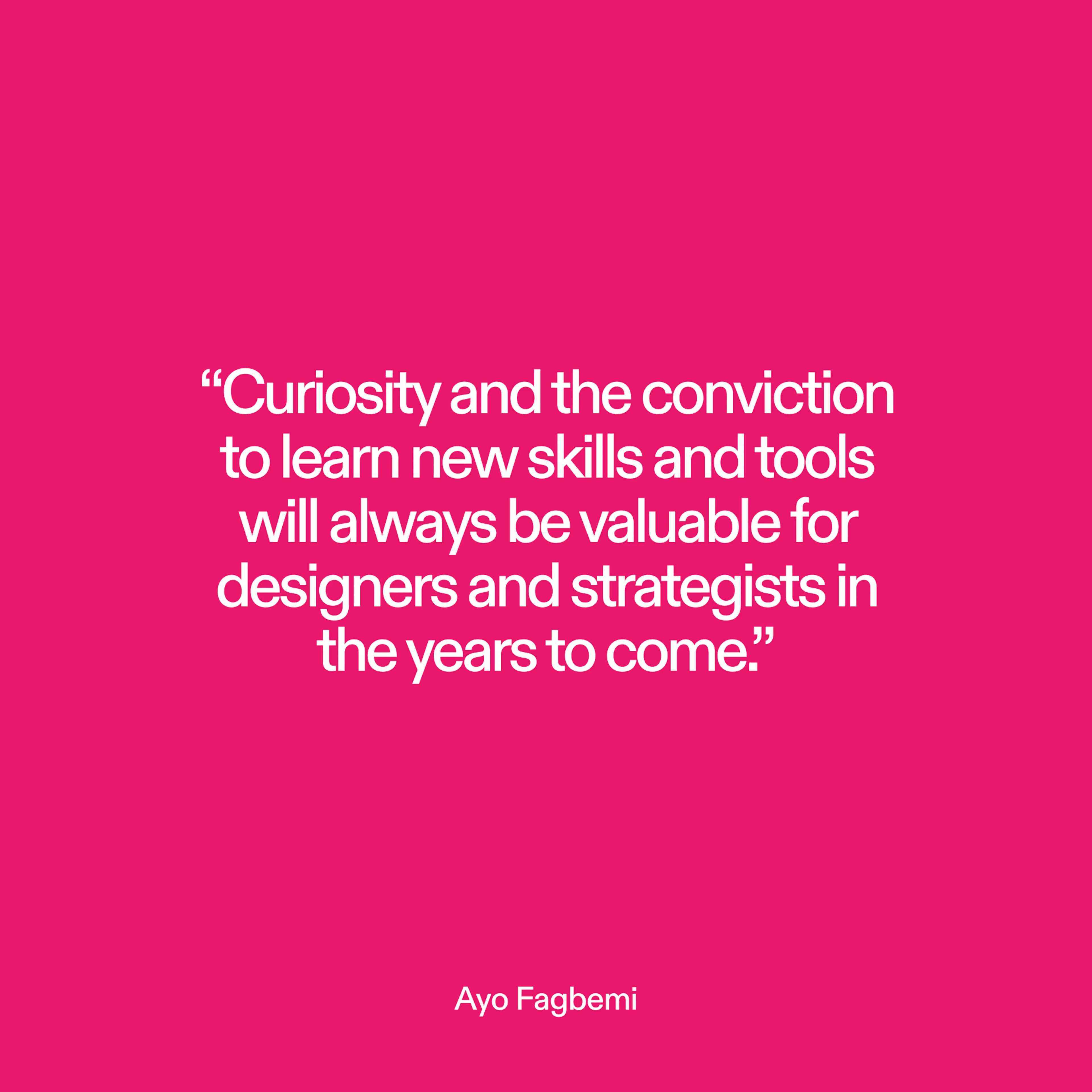
Ayo: Curiosity and the conviction to learn new skills and tools will always be valuable for designers and strategists in the years to come. I say this as someone who advocates for the use of analog and new technologies. Finding insights and takeaways through reading or speaking to people, as well as understanding patterns that emerge in data and online sentiment. Overall, a core skill which will always be important is clarity and simplicity. As they say it’s the ultimate genius being able to express an idea to as many people as possible, the better you get at this whether through visuals or words that more sustainable your career will be.

Garrett: Not waiting to do the work you dream of is an important habit to develop. Strategy is often about giving form and direction to abstract challenges. While it’s natural to assume you must be given a challenge to create a solution, any brand’s shortcomings are often on display for anyone to see. You can create hypothetical strategies easier than you might think. Which allows you to have something to share with those who may pay you to come up with something for them. We want students to leave believing that there’s nothing standing between them and a portfolio worthy of the toughest briefs

As the boundaries between design, strategy, technology, and other disciplines continue to blur, do you think designers are being asked to do more, or are they simply gaining more opportunities to influence the work?

Ayo: Everyone is being asked to do more, yes. This definitely has its challenges as it can be difficult to not keep going or working. At the moment, something that is important is being able to set your own personal boundaries to protect time for other things that stimulate you as a person and your creativity outside of work. The benefit is the ability to have better conversations as the language of communication becomes more democratized. We have strategists making sketches or designers writing lines or coding websites in order to get their ideas across in a clearer way with the specialists in the group. It helps to bring more voices and ideas into the room in order to select and give the final result the right strategic grounding and attention to detail and craft. 

Garrett: We’re entering a time where all will be asked to be strategic thinkers. The time where the work speaking for itself is becoming rarer to pull off. Which means why the work is right for the subject is just as important as the work itself. That is overwhelming in some sense, but equally opportunistic. It’s an obvious way to distinguish yourself in a time when the making feels increasingly commodified.

For designers who want to move toward strategy, what can they do early in their careers to develop and demonstrate strategic thinking, even if “strategist” isn’t in their job title?

Ayo: I’m a big champion of people in the team being nosy and asking lots of questions. It’s important to interrogate the strategy as a designer, to not just take what you are given, but to work with it. Also, ask your strategist friends what books they recommend reading, or podcasts they listen to. It’s like trying to find a way into someone else’s echo chamber at times, it will help you learn a lot and also understand the people you work with a lot more.

Garrett: Ideas are plenty, direction is rare. Especially in creative environments, I’ve experienced that potential solutions are easy to produce. The difference between, ‘We could do this?’ and ‘We should do this, here’s why’ is a very large chasm. Those that can help others around them traverse that chasm will find themselves naturally falling into strategy before they know it.

You’ve both worked across major global brands and different industries. What have you learned about building a career that crosses industries? Is there anything you wish you had known when you were starting out?

Ayo: I’ve had the fortunate opportunity to work at an advertising agency, in-house studios, and at branding companies. It’s helped me understand the role of brand and strategy across all of these different vantage points. To figure out how it can be useful in many different stages from developing the brand, making it useful across the whole org and also helping shape ideas that grow the brand. I wish I’d learnt from the beginning how important it is to understand the timeless principles and be adaptable to how they come to life in timely ways.

Garrett: There will always be more problems to solve than solvers available to solve them. That mindset has kept me optimistic about the opportunities before me. Rather than feeling a scarcity mindset around open roles or select agencies, I’ve been fortunate to learn quickly that solving problems for other people is the easiest way to remain in-demand. It’s industry agnostic and human first by nature.

Finally, what do you hope students take away from Bridging Strategy & Design, not only in terms of what they learn, but in how they approach their careers and the work they want to put into the world?

Ayo: I hope they find ways to make strategy an actionable part of their daily lives, and understand their own point of view in the process to have a way that can come back to in order to find and solve the right problems.

Garrett: That the way we each see the world can be of value to others. Influence and validity of opinion often feel like they are a right reserved for the tenured. But influence is a matter of informed understanding, the ability to illuminate the path others may not have seen or had confidence in taking. We all have something to share, we all have strategies to write. Something unexpected exists within everyone.